White crust on your pool tile. Gray streaks on the block wall where the sprinklers hit. A dull film over your stone fountain. That is calcium scale, and in Southern California it builds up fast.
Calcium removal sand blasting is the professional way to strip hardened scale off tile, stone and concrete without damaging the surface underneath. Scrubbing barely touches heavy scale, acid can etch tile and grout, and a pressure wash rinses right over it.
This guide explains what causes calcium buildup, how the blasting process works, which surfaces it restores and how to choose the right local crew.
The quick answer:
· Calcium removal sand blasting uses fine media such as glass beads or baking soda at low pressure, not beach sand.
· It removes hard scale that acid and pressure washing leave behind.
· Most home pool tile lines are finished in one day, without draining the pool.
What Causes Calcium Buildup on Hard Surfaces?
Calcium buildup is mineral scale left behind when hard water evaporates. The water dries off, but the dissolved calcium and magnesium stay on the surface, one thin layer at a time.
The U.S. Geological Survey classifies water above 120 mg/L of calcium carbonate as hard and above 180 mg/L as very hard (USGS). The harder the water, the faster scale forms.
Pools are the worst case. Water evaporates at the tile line every day, fresh water tops it up, and minerals concentrate right where you can see them. Pool chemistry maker Orenda calls evaporation lines on tile one of the most common types of scale
Calcium Carbonate vs. Calcium Silicate Scale
Not all scale is the same, and the type decides the method.
| Scale type | Look and feel | How it forms | Best removal |
| Calcium carbonate | White, chalky, flaky | Evaporation and scale-forming water chemistry | Tile cleaner, pumice or light media blasting |
| Calcium silicate (silica scale) | Gray-white, glassy, rock-hard | Builds over years, often on cement-based surfaces | Media blasting |
Silica scale is the stubborn one. Orenda describes it as “apparently immune to muriatic acid,” which is why blasting is often the only practical fix.
Why Southern California Surfaces Scale Up Faster
Three local factors work together:
· Hard water. Many Southern California water supplies test in the hard range.
· Heat and sun. Hot, dry days speed up evaporation at the waterline.
· Sprinklers. Irrigation spray dries on walls, glass and stone every day.
Inland cities feel it most, and many homeowners see a fresh ring within one season. That is why we offer Removal Sand Blasting in City of Industry, CA and in the communities around it.
How Calcium Removal Sand Blasting Works
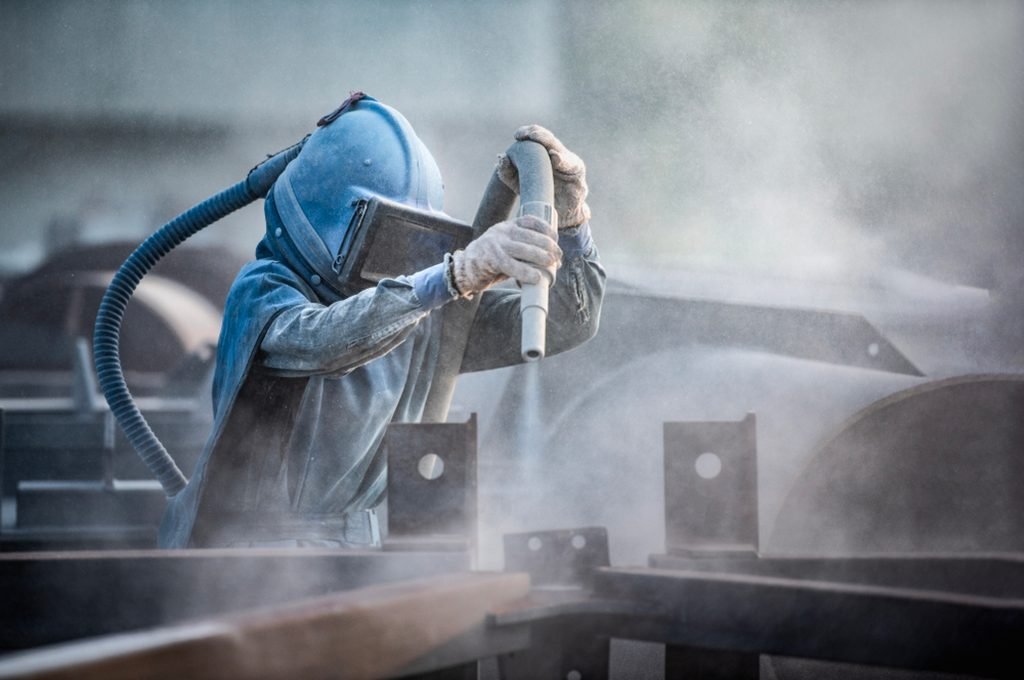
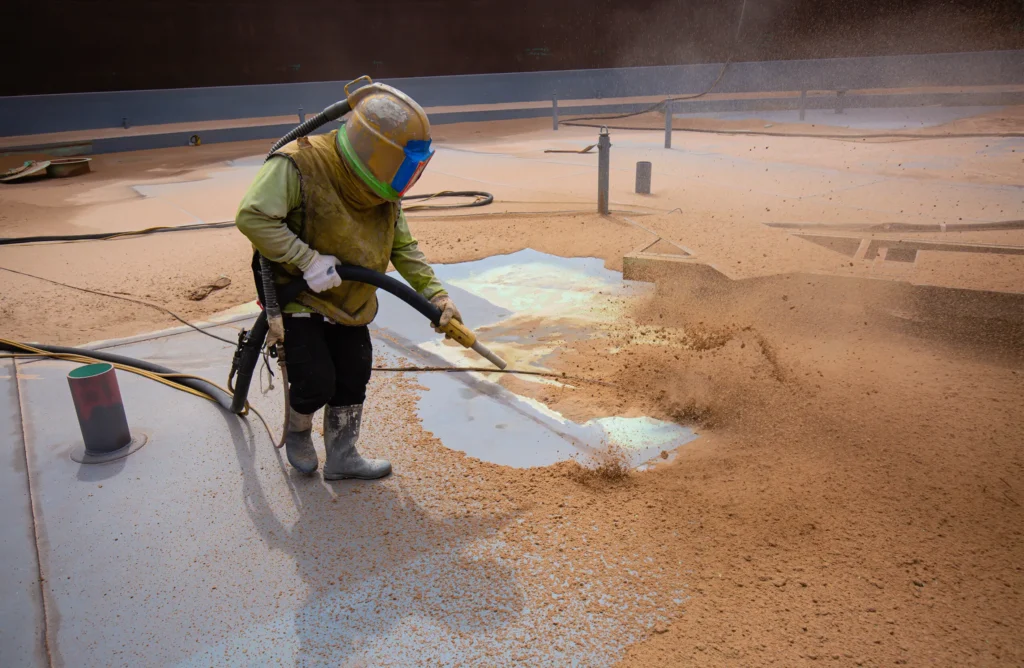
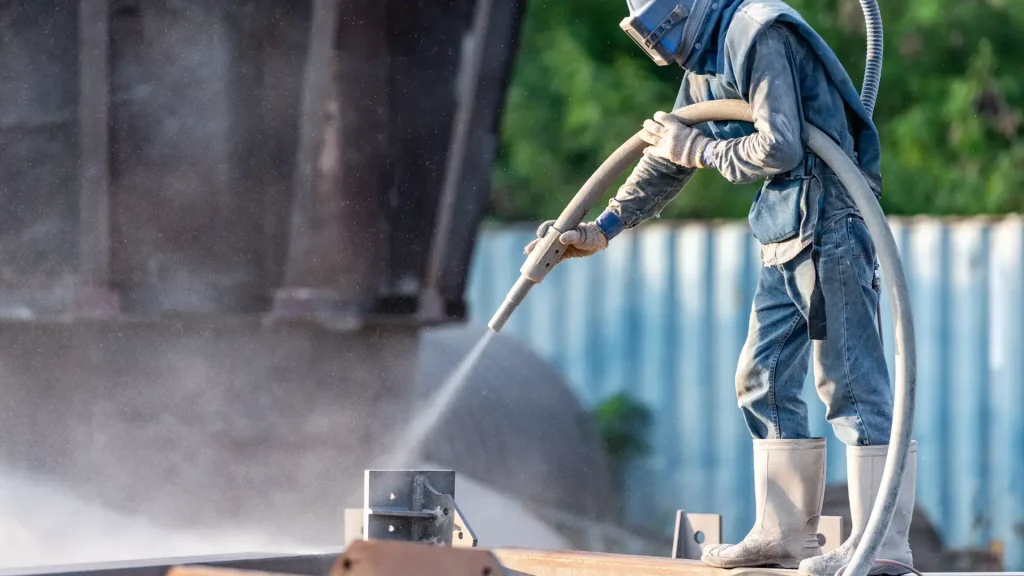
Despite the name, calcium removal sand blasting rarely uses beach sand today. Crews use fine media such as glass beads or sodium bicarbonate, fired at low pressure from a portable blast pot.
Scale is more brittle than glazed tile or sealed stone. The media cracks the scale and knocks it loose, while the surface underneath stays smooth.
The Step-by-Step Process
1. Inspect and test. The technician checks the scale type, the tile or stone, and the grout, then blasts a small test spot.
2. Prepare the area. Pool water is lowered just below the tile line. Pumps, plants and nearby surfaces are covered.
3. Set media and pressure. Media, grit size and pressure are matched to the surface and the scale thickness.
4. Blast. The nozzle moves in steady, overlapping passes at a constant angle and distance.
5. Clean up. Spent media is vacuumed and rinsed away, and the results are checked in good light.
6. Refill and advise. The pool is refilled, and you get simple tips to slow future buildup.
Choosing the Right Blasting Media
| Media | Best for | What to know |
| Glass beads | Heavy scale on glazed tile and stone | The most common choice for pool tile. Leaves a smooth finish at the right pressure. |
| Sodium bicarbonate (soda) | Light scale, glass mosaic tile, delicate surfaces | The gentlest option. Dissolves in water but struggles on thick scale. |
| Crushed glass or aluminum oxide | Concrete, masonry, old coatings | Aggressive. Not suited to glazed tile. |
| Silica sand | Rarely used today | Releases respirable crystalline silica dust, a known lung hazard regulated by OSHA. Can scratch tile. |
The Sand Blaster Machine Behind Professional Results
A professional sand blaster machine is more than a hopper and a hose. A pro setup pairs a blast pot with a compressor, a moisture separator, a fine pressure regulator and several nozzle sizes.
That control lets a technician lift glassy scale off glass mosaic tile without frosting it. Rental units rarely offer the same precision.
Which Hard Surfaces Can Calcium Removal Restore?
Professional calcium removal works on most hard, durable surfaces:
· Pool and spa waterline tile, the most common job
· Pool coping and natural stone such as travertine and flagstone, using softer media
· Fountains and water features, where constant splashing builds thick scale
· Concrete and block walls with white sprinkler stains
· Pavers and pool decks with a cloudy mineral haze
· Brick and masonry with efflorescence and hard water marks
Some surfaces need a different method. Window glass and shower doors frost under any abrasive, so they are treated chemically instead.
Signs Your Surfaces Need Calcium Removal
· A white or gray ring along the pool waterline
· Scale that will not come off with a pumice stone or tile cleaner
· A rough, sandpaper feel on tile that used to be smooth
· Chalky streaks on walls near sprinkler heads
· Stone or pavers that look dull even after a wash
Calcium Removal Sand Blasting vs. Water Blasting House Cleaning
Water blasting house cleaning, better known as pressure washing, uses water force alone. It is excellent for dirt, mildew and grime on siding, driveways and patios.
Calcium is a bonded mineral, though, so water barely moves it. Raising the pressure high enough to try can gouge grout and concrete.
| Method | Removes hard calcium scale? | Risk to surface | Best use |
| Pressure washing | No | Low at normal settings | Dirt, mildew, general exterior cleaning |
| Acid washing | Partly, on carbonate scale only | Can etch tile, stone and grout | Light scale, handled by a trained pro |
| Media blasting | Yes | Low when media and pressure are matched | Hardened scale on tile, stone and concrete |
Many homeowners book both together: a pressure wash for the deck and walls, then media blasting for the tile line. JM Pressure handles both in one visit.
Benefits of Professional Calcium Removal
· Restores the original look. Tile regains its color and shine, and stone stops looking chalky.
· Protects the surface. Matched media removes scale without the etching harsh acids can cause.
· Makes cleaning easier. Rough scale gives algae and dirt a place to cling. Smooth tile stays cleaner.
· No draining needed. Pool water only drops a few inches below the tile line.
· Fast turnaround. Most residential tile lines are done in a day.
· Better curb appeal. A clean pool and patio add value when you sell or host.
Can You Do Calcium Removal Yourself?
Light carbonate scale can often be handled with a pumice stone or a pool tile cleaner. Heavy silicate scale is a different job, and renting a sand blaster machine brings real risks:
· The wrong media or pressure can permanently etch glazed or glass tile.
· Loose media can end up in your pool filter, pump and plumbing.
· Rental, media and cleanup costs can come close to the price of a professional job.
If the scale is gray, glassy or several years old, a pro is usually the safer and cheaper choice.
How to Choose Sand Blasting Near Me
A search for sand blasting near me returns everything from industrial paint strippers to pool specialists. For calcium work, look for a company that:
· Asks about your tile type and runs a test spot first
· Uses pool-safe media and explains which one and why
· Protects your equipment and landscaping, and removes all spent media
· Carries liability insurance and gives a written quote
· Shows before-and-after photos from local jobs
Local experience matters, because water hardness and tile styles vary from city to city. Homeowners across the county rely on our Sand Blasting in Los Angeles, CA service for exactly that reason.
How to Keep Calcium From Coming Back
Balance your water. Keep calcium hardness and pH in range. Orenda notes that a Langelier Saturation Index above +0.30 is scale-forming.
Use a scale inhibitor. A sequestering agent helps keep dissolved calcium from settling on tile.
Wipe the tile line. A weekly pass with a pool-safe tile cleaner stops scale before it hardens.
Redirect sprinklers. Adjust heads so they do not spray walls, glass or stone.
Seal porous surfaces. Sealed stone and pavers resist new scale and clean up faster.
Schedule regular service. Many Southern California pool owners book calcium removal every one to two years.
Frequently Asked Questions
Will calcium removal sand blasting damage my pool tile?
Not when the media and pressure are matched to the tile. The scale is more brittle than the glazed surface beneath it, and a test spot confirms the settings before the full job starts.
Do I need to drain my pool?
No. The water only needs to drop a few inches below the tile line. The pool is refilled as soon as the work is done.
How long does calcium removal take?
Most residential pools are finished in one day. Large commercial pools, very thick scale or extra features such as fountains can add time.
How much does calcium removal sand blasting cost?
Price depends on the linear feet of tile, the type and thickness of scale, the media needed and site access. Photos of your tile line are usually enough for an accurate quote.
Is water blasting house cleaning enough to remove calcium?
No. Pressure washing removes dirt and mildew, but bonded calcium scale needs media blasting or a controlled chemical treatment.
How often should calcium removal be done?
It depends on your water and how well it is balanced. Pools with good chemistry and weekly tile wiping can go two years or more between treatments.
About JM Pressure
JM Pressure, also known as JM Pressure Washers, is a pressure washing and surface restoration company based in Riverside, California. The team serves homes and businesses across the Inland Empire, Los Angeles County and Orange County.
Services include calcium removal sand blasting, house and roof washing, concrete and paver sealing, rust and graffiti removal, and dry ice blasting. Every calcium job starts with an inspection and a test spot, so the media and pressure fit your exact surface.
Restore Your Tile, Stone and Concrete With JM Pressure
Hard water scale never washes away on its own, and it gets harder to remove every season. Calcium removal sand blasting takes years of buildup off your pool tile, stone and concrete in a single visit, without harsh acids or DIY risk.
JM Pressure serves Riverside, Los Angeles and Orange County, including Calcium Removal Sand Blasting in Anaheim, CA.
Call 909-701-9977 or request a quote from JM Pressure Today. Send a photo of your tile line for a fast estimate.