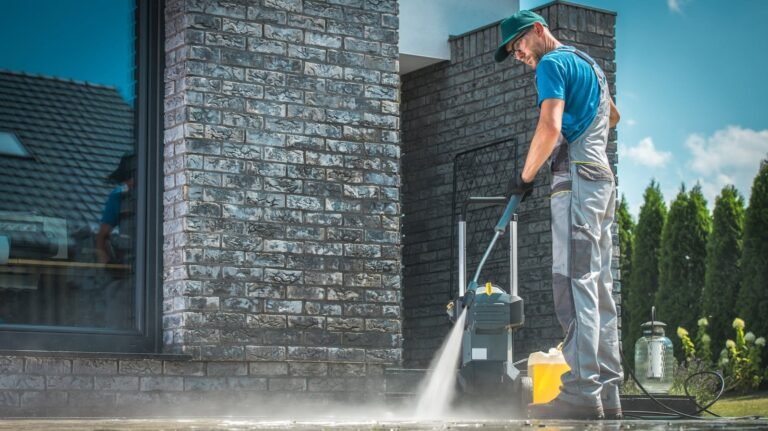
A pressure washer looks simple. Plug it in, pull the trigger and watch years of grime disappear. Then the first-timer notices the zebra stripes on the driveway, the fuzzy gouges in the deck boards and the water that somehow ended up inside the garage.
Pressure washing is one of the fastest ways to refresh a home, but the machine does not forgive guesswork. Too much pressure etches concrete and splinters wood. Too little wastes an afternoon. The good news is that a handful of habits separate a streaky, risky job from a clean, even one.
Our crews at JM Pressure clean driveways, patios, stucco walls and commercial lots across the Inland Empire every week. This guide shares the same tips we teach new technicians: how to pick the right pressure and nozzle, the best pressure washing methods for common surfaces, the safety rules that matter most and when to hand the wand to a pro.
The quick answer:
- Match pressure to the surface. Wood and siding need far less force than concrete, and the nozzle matters as much as the machine.
- Test first, then work in steady, overlapping passes about 12 to 18 inches from the surface.
- Treat the spray like a tool that can cut skin. Wear eye protection, keep both hands on the wand and never point it at people, pets or windows.
- Use a surface cleaner for concrete to avoid stripes, and call a professional for second stories, pre-1978 paint or heavy stains.
Pressure Washing for Beginners: What You Need to Know First
Before you pick up the wand, it helps to know what the numbers on the box mean. Pressure washing for beginners gets much easier once you understand two terms: PSI and GPM.
PSI, GPM and Why Both Matter
PSI (pounds per square inch) is the force of the water. It breaks the bond between dirt and the surface. GPM (gallons per minute) is the volume of water. It carries the loosened dirt away. A machine with high PSI and low GPM can blast a spot clean but takes ages to rinse a driveway. A machine with good GPM rinses faster and more evenly.
Many manufacturers combine the two into cleaning units (PSI multiplied by GPM). When you compare two machines, the one with more cleaning units will usually finish the same job faster.
Gas vs. Electric: Which Machine Fits the Job?
| Type | Typical range | Best for | Watch out for |
| Electric | 1,300 to 2,000 PSI | Patio furniture, cars, small decks, grills | Short reach, extension cord and outlet safety |
| Gas, mid-size | 2,000 to 3,000 PSI | Driveways, siding, fences, larger patios | Noise, fumes, engine upkeep |
| Gas, heavy-duty or commercial | 3,000+ PSI, 3 to 5+ GPM | Large concrete, parking areas, paint prep | Easy to damage softer surfaces |
For most homeowners, a mid-size machine around 2,500 to 3,000 PSI covers driveways and walls, as long as you lower the force for softer surfaces with the right nozzle and distance.
10 Pressure Washing Tips for Better Results
These are the tips that make the biggest difference for first-time users. Follow them in order and your results will look more like a professional job.
1. Match the Pressure to the Surface
The most common beginner mistake is using one setting for everything. Each surface has a comfortable range, and going above it causes damage that cannot be undone.
| Surface | Suggested pressure | Recommended nozzle |
| Cars, windows, outdoor furniture | 1,200 to 1,500 PSI | White (40°) |
| Softwood decks and fences (pine, cedar) | 500 to 1,200 PSI | Green (25°) or white (40°) |
| Vinyl siding and painted stucco | 1,300 to 1,600 PSI | White (40°) plus detergent |
| Pavers and brick | 1,500 to 2,500 PSI | Green (25°) or surface cleaner |
| Concrete driveways and sidewalks | 2,500 to 3,500 PSI | Yellow (15°) or surface cleaner |
These are starting points, not rules. Older, cracked or freshly poured surfaces need gentler treatment. New concrete should cure for about 28 days before any pressure washing.
2. Learn the Nozzle Color Code
The nozzle controls how concentrated the spray is, so it does as much work as the engine. Most machines use the same color code:
- Red (0°): A pinpoint jet. It can cut wood, strip paint and injure skin. Beginners should skip it entirely.
- Yellow (15°): Strong and narrow. Good for stripping and heavy concrete stains.
- Green (25°): The all-purpose tip for decks, patios, wheel wells and general cleaning.
- White (40°): Wide and gentle. Best for siding, windows and anything fragile.
- Black (65°) or soap tip: Very low pressure. It pulls detergent through the machine and applies it without blasting it into the surface.
When in doubt, start with the widest tip and move to a narrower one only if the dirt is not lifting.
3. Prep the Area Before You Pull the Trigger
Ten minutes of prep saves an hour of cleanup. Sweep loose debris, move furniture and planters, and close windows and doors. Cover outlets, light fixtures and outdoor electrical boxes with plastic and painter’s tape. Wet down nearby plants so they absorb clean water instead of detergent, and walk the area to look for loose siding, cracked boards or chipped paint that the spray could make worse.
4. Start Low, Test Small, Then Work Up
Always test in a hidden spot first, such as behind a shrub or the corner of the patio. Start with a wide nozzle held further back, then move closer or switch to a narrower tip until dirt lifts without marking the surface. If you see etching, raised wood fibers or paint flakes, back off right away.
5. Keep the Right Distance and a Steady Angle
For most surfaces, hold the tip about 12 to 18 inches away and closer only on hard concrete. Spray at a slight angle (around 45 degrees) rather than straight on, so the water pushes dirt away instead of driving it into the surface. Keep the wand moving. Holding it still in one spot, even for a second, is how etched lines and gouges happen.
6. Let Detergent Do the Heavy Lifting
Pressure alone is not the best tool for mildew, algae, grease or oil. A cleaner made for pressure washers loosens these first, so you can rinse with less force. Apply detergent from the bottom up on walls (this prevents streaks from running down dry areas), let it dwell for 5 to 10 minutes without drying, then rinse. Never put bleach or household chemicals in a machine unless the manufacturer says it is safe.
7. Work Top to Bottom in Overlapping Passes
Rinse from the top down so dirty water does not run over areas you have already cleaned. Use long, even strokes and overlap each pass by a few inches. On decks, follow the direction of the boards and finish each board end to end. Stopping in the middle of a board or slab leaves visible lap marks.
8. Use a Surface Cleaner for Concrete Pressure Washing
Concrete pressure washing with only a wand almost always leaves stripes, because no one can hold a perfectly even distance across a whole driveway. A surface cleaner is a round attachment with spinning nozzles under a hood. It cleans a wide, even path and keeps spray off your legs and windows.
Sweep first, pretreat oil and tire marks with a degreaser, then run the surface cleaner in slow, overlapping rows. Finish by rinsing the debris toward the lawn, not the street. For deeper stains, mineral buildup or worn coatings, professional methods for Pressure Washing Concrete Surfaces go beyond what a rental machine can do.
9. Rinse Thoroughly and Protect Your Results
Leftover detergent attracts dirt and can leave a film on glass and paint. Give every area a final low-pressure rinse. Let wood dry for at least 48 hours before sealing or staining, and let concrete and pavers dry fully before applying sealer. Sealing after a cleaning keeps stains from soaking in and stretches the time before your next wash.
10. Know When to Stop and Call a Pro
Some jobs are not worth the risk. Call a professional when the work requires a ladder, involves second-story walls or roofs, the home was painted before 1978, or the stains have not budged after two careful attempts. A pro team brings hot water units, commercial surface cleaners and the experience to know when not to add more pressure.
Pressure Washing Safety Tips Every Beginner Should Follow
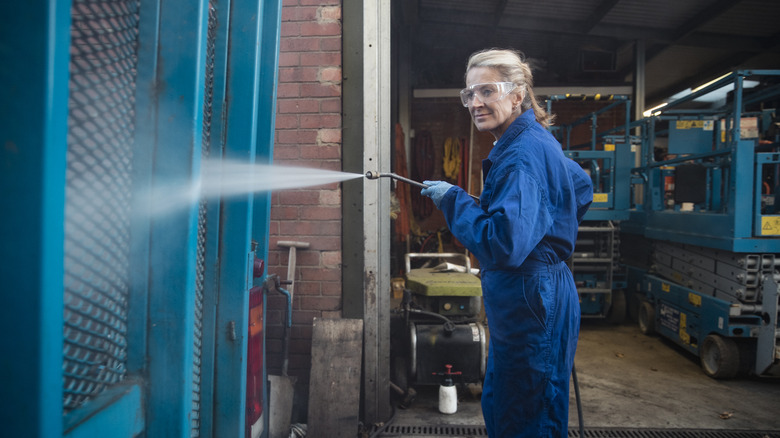
A pressure washer stream can cut through skin and inject water and debris under it. These injection wounds can look minor at first but need emergency care. Follow these pressure washing safety tips every time:
- Protect your eyes, ears and feet. Wear safety glasses or goggles, closed-toe shoes and long pants. Gas engines are loud, so hearing protection is a smart habit .
- Keep both hands on the wand and set the trigger lock whenever you stop or change nozzles.
- Never point the spray at people, pets, windows or electrical fixtures.
- Run gas machines outdoors only, well away from open doors, windows and vents. Engine exhaust contains carbon monoxide, which can build up quickly .
- Plug electric units into a GFCI outlet and keep cords and connections out of standing water.
- Stay off ladders while spraying. The kickback from the wand can throw you off balance. Use an extension wand or hire a crew with proper fall protection.
- Be careful with older paint. Homes built before 1978 may have lead-based paint, and blasting it can spread lead chips and dust.
- Keep wash water out of storm drains. In California, only rainwater belongs in storm drains. Direct runoff to landscaping and use biodegradable cleaners.
Best Pressure Washing Methods for Common Surfaces
The best pressure washing methods change from one surface to the next. Here is how to approach the four surfaces homeowners clean most often.
Concrete Driveways, Patios and Walkways
Concrete is tough, but it is also porous. Pretreat oil spots, use a surface cleaner and keep the wand moving. In the Inland Empire, hard water and sprinkler overspray often leave white mineral deposits on concrete and block walls. Pressure alone will not remove them, and they usually need a mild acid treatment or professional restoration.
Wood Decks and Fences
Use low pressure, a 25° or 40° tip and a wood cleaner. Work with the grain. If the wood turns fuzzy, you are too close or using too much force. Let it dry for two days before sealing.
Vinyl, Stucco and Painted Siding
Stucco is common across Southern California and cracks or absorbs water when blasted. Use the soap tip, a stucco-safe cleaner and a gentle 40° rinse, and spray downward so water does not get behind siding. For mildew on shaded walls, a low-pressure soft wash works better than more force.
Pavers and Brick
Use moderate pressure and avoid aiming into the joints, which washes out the sand. Refill joints with polymeric sand after cleaning, then seal to lock it in and resist weeds.
Common Pressure Washing Mistakes to Avoid
- Starting with the red tip. It causes more damage than any other mistake.
- Spraying up under siding or into window seals, which pushes water into walls.
- Washing in direct midday sun, which dries detergent too fast and leaves streaks.
- Running the pump without water, which can ruin it in seconds. Always connect and run water before starting the engine.
- Skipping the test patch on a surface you have never cleaned before.
DIY or Professional Pressure Washing?
DIY pressure washing makes sense for patio furniture, a small deck or a single-story walkway. Once a job involves height, large concrete areas, oil stains, rust, efflorescence or stucco, a professional usually finishes faster and safer, and often costs less than repairing etched concrete or damaged siding.
If you are on the coast, our team also offers Pressure Washing in San Diego, CA for homes, storefronts and HOA common areas.
What to Ask Before You Hire
- Are you licensed and insured? Ask for a certificate of insurance.
- Do you adjust pressure for each surface? A good company uses soft washing for stucco and roofs.
- How do you handle runoff? Look for water reclamation and storm drain protection.
- Can you show before-and-after photos of jobs like yours?
Frequently Asked Questions
What PSI should a beginner use for pressure washing?
Start low. Around 1,300 to 1,600 PSI with a 40° tip is safe for most siding, furniture and vehicles. Concrete can take 2,500 to 3,500 PSI. Test a hidden spot first and increase force only if dirt is not lifting.
How far should I stand from the surface?
Keep the nozzle 12 to 18 inches away for most surfaces. Move closer only on hard concrete, and back off immediately if you see marks or etching.
Can pressure washing damage concrete?
Yes. If concrete pressure washing is done with a narrow tip held too close, it can etch lines and expose the aggregate. Use a 15° or 25° tip or a surface cleaner, keep moving and let detergent handle oil and grease.
Is pressure washing safe for stucco and painted homes?
Only at low pressure. Stucco and older paint are easily damaged, and homes built before 1978 may have lead paint. A low-pressure soft wash is the safer method.
How often should I pressure wash my home?
Most homes benefit from a wash once a year. Driveways, shaded walls and properties near busy roads or with heavy sprinkler use may need it every six months.
Should I seal concrete after pressure washing?
Sealing helps concrete and pavers resist stains, water and UV fading. Let the surface dry completely, usually 24 to 48 hours, before applying sealer.
About JM Pressure
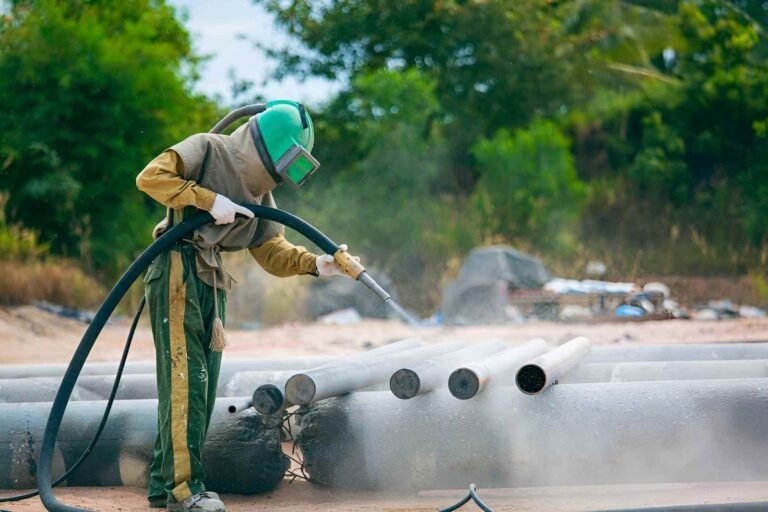
JM Pressure, also known as JM Pressure Washers, is an exterior cleaning and surface restoration company based in Grand Terrace and serving Riverside, San Bernardino and the wider Inland Empire, along with San Diego. Our services include residential and commercial pressure washing, concrete cleaning, calcium removal, sand blasting and solar panel cleaning.
The company is licensed and insured, with $2 million in general liability and $1 million in auto coverage. We use water reclamation and runoff controls on every job and offer early and after-hours scheduling for businesses.
Explore our Pressure Washing Services in Riverside, CA for driveways, walkways, walls, patios and commercial lots