Solar panels are one of the few things on your property that pay you back every sunny day. But they only work as well as the light that reaches them. A thin film of dust, a few bird droppings or a layer of wildfire ash is enough to cut the power your system makes, and in Southern California, rain is rarely around to wash it off.
Solar panel cleaning is the simplest way to keep that output where it should be. The catch is that it has to be done the right way. The wrong water, tools or pressure can leave spots, scratch the glass or even put your warranty at risk.
This guide explains how much dirt really costs you, the simple steps that keep panels efficient, how to protect panels from birds, and what commercial owners and homeowners should look for when hiring help.
The quick answer:
- Dirty panels lose output a little every day, and heavy soiling such as bird droppings, pollen or ash can cut production much more.
- Most homes in the Inland Empire benefit from a gentle cleaning once or twice a year. Low-tilt commercial roofs and sites near freeways or fields often need more.
- Never pressure wash solar panels. Use soft brushes, low pressure and pure water, and hire a pro for anything you cannot reach safely from the ground.
Why Solar Panel Cleaning Matters for Energy Efficiency
A solar panel turns light into electricity. Anything that blocks light before it reaches the cells means fewer kilowatt-hours, and those losses add up quietly because the system keeps running and nothing looks broken.
How Dirt Cuts Solar Output
Researchers at UC San Diego tracked 186 residential and commercial solar sites across California and found that panels lost a little under 0.05% of their efficiency per day without rain. Over a 145-day dry summer, that added up to a 7.4% loss (UC San Diego).
Some kinds of dirt hit harder. In a study of five solar plants, the National Renewable Energy Laboratory found pollen cut output by as much as 15% at the peak of the season, and rain alone never brought performance fully back. Without planned cleaning, the yearly loss could reach about 10% (NREL).
When Cleaning Pays Off and When It Can Wait
To be honest about it: light, even dust on a steep residential roof usually costs only a few dollars a month, and the same UC San Diego study found that a mid-summer wash on a typical 5 kW home system recovered only about $20 of electricity. That is why we tell homeowners not to book a cleaning out of habit.
Solar panel cleaning clearly pays off when:
- Bird droppings cover parts of the panels. Rain does not remove them, and they block light completely.
- Panels sit at a low tilt (under about 5 degrees), so dirt does not slide off. This is common on flat commercial roofs.
- The property is downwind of a freeway, a warehouse yard, a farm field or a construction site.
- Ash, pollen or a dust storm has left a visible coating.
- The array is large. On a commercial system, a few percent of lost output is real money every month.
What Makes Solar Panels Dirty in the Inland Empire
Riverside, San Bernardino and the surrounding cities are harder on solar panels than the coast. These local conditions are the usual culprits:
- Dry months and little rain. Long dry stretches let dust build up for months at a time.
- Santa Ana winds. Fall wind events carry fine desert dust and leave a gritty film on every rooftop.
- Freight and warehouse traffic. Truck routes along the I-10, I-15 and SR-60 corridors leave diesel soot and tire dust that bond to glass.
- Wildfire ash. Ash is sticky and slightly alkaline, and it should be rinsed off gently, not scrubbed dry.
- Hard water. Inland water is high in minerals. Hosing panels with it, or letting sprinklers hit them, leaves white spots that scatter light.
- Birds. Pigeons love the shade and shelter under rooftop arrays, which brings droppings, nesting debris and chewed wiring.
7 Simple Ways to Improve Solar Panel Efficiency
You do not need special equipment to protect your system’s output. These steps cover most of what owners can do.
1. Watch Your Monitoring App
Most systems come with an app or inverter display that shows daily production. Compare sunny days month to month. A steady drop that is not explained by shorter days or weather is often the first sign your panels need attention.
2. Clean When Panels Are Cool
Clean early in the morning or in the evening. Cold water on hot glass can stress the panel, and fast drying in the midday sun leaves streaks and mineral spots behind.
3. Use Soft Water, Soft Brushes and Low Pressure
Use purified (deionized) water, a soft brush or squeegee and, only if needed, a mild, non-abrasive soap. Avoid harsh chemicals, scouring pads and high pressure. Many panel makers warn against these in their care instructions, and damage from them may not be covered under warranty.
Hard water spots on panels are best prevented, not scrubbed. If minerals have already crusted onto pool tile, block walls or stone around your home, that is a separate job for Calcium Removal Sand Blasting. Blasting is never used on solar glass.
4. Rinse Light Dust From the Ground
For ground-mounted panels or low roofs, a gentle rinse with a hose and soft spray nozzle from the ground is often enough to clear loose dust and pollen. Do not climb onto the roof or walk on the panels to do it.
5. Remove Bird Droppings Quickly
Droppings block light completely on the cells they cover, and that shaded spot can drag down the output of the whole string. They also harden fast in the sun. Soften them with water first, then wipe gently.
6. Trim Trees and Clear Debris
Overhanging branches drop leaves, sap and pollen, and they shade the array in the afternoon. Keep trees trimmed back and clear leaves from the edges and gaps where debris collects.
7. Book a Professional Cleaning and Inspection
A professional solar panel cleaning includes more than a rinse. A good crew also looks for cracked glass, loose wiring, nesting and hot spots, so small problems are caught before they cost you more.
Solar Panel Protection From Birds
Birds are one of the most common reasons owners call for a cleaning, and solar panel protection from birds is the fix that keeps that cleaning from becoming a monthly job. Pigeons nest in the gap under rooftop panels, where their droppings, feathers and nesting material pile up, block airflow and can damage wiring.
The most effective options are:
- Mesh guards. Wire mesh clipped around the edge of the array seals the gap so birds cannot get under it. Good systems clip on without drilling into the panels or the roof.
- Cleaning out the nests first. Old nesting debris should be removed and the area cleaned before guards go on, or the problem stays trapped underneath.
- Keeping attractants away. Remove food sources and standing water near the roof.
One important note: most native birds are protected under the federal Migratory Bird Treaty Act, so active nests of protected species should not be disturbed (U.S. Fish and Wildlife Service). Feral pigeons are not covered, but a professional should still confirm what is nesting before removal.
H2: Commercial Solar Panel Cleaning: Protecting a Bigger Investment
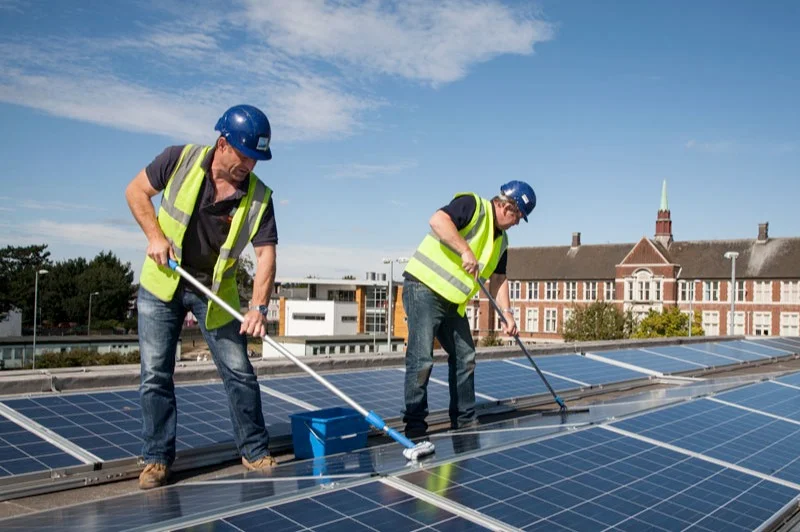
On a warehouse, retail center or office building, every percentage point of lost output is multiplied across hundreds of panels. Commercial solar panel cleaning is where cleaning most clearly pays for itself, and it is especially important for flat roofs where panels sit at a low tilt and dirt does not slide off.
A solid commercial plan includes:
- A cleaning schedule based on the site’s dust, traffic and bird activity, not a fixed calendar.
- Before-and-after production checks so owners can see the gain.
- Roof safety controls, including fall protection that meets OSHA rules .
- Water reclamation and runoff control, so cleaning water does not reach storm drains.
- Early or after-hours scheduling around tenants and business operations.
Many property managers bundle panel care with other exterior maintenance. JM Pressure already works on commercial sites across the region, and you can learn more about our Commercial Solar Panel Cleaning and related property services for warehouses, HOAs and retail centers.
How Often Should You Clean Solar Panels?
There is no single schedule. Tilt, location, nearby traffic and birds all change the answer. Use these ranges as a starting point:
| Property type | Typical frequency | Why |
| Home, steep roof, away from traffic | Once a year | Light dust; rain and tilt do some of the work |
| Home near a freeway, field or construction | Every 6 months | Soot and dust bond to the glass faster |
| Home with pigeons or trees overhead | Every 3 to 6 months, plus bird guards | Droppings and debris do not rinse off |
| Ground-mounted panels | Every 3 to 6 months | Low height collects more dust and splashback |
| Commercial flat roof, low tilt | Every 3 to 4 months | Dirt does not slide off flat panels |
| Warehouse or logistics site | Quarterly or based on output data | Diesel soot, tire dust and large array size |
After a dust storm, a wildfire or a heavy pollen spring, check your monitoring app and clean sooner if output drops.
DIY vs. Hiring a Solar Panel Cleaning Business
Rinsing ground-level panels with a hose is a reasonable DIY job. Rooftop arrays are different. Wet panels are slippery, roof falls are a leading cause of serious injury, and the wrong tools can scratch the anti-reflective coating that helps panels absorb light.
What to Look for in a Solar Panel Cleaning Business
Before you hire, ask these questions:
- Are you licensed and insured? Ask for a certificate of insurance, especially for rooftop and commercial work.
- What water do you use? The answer should be purified or deionized water, not straight hard tap water.
- What pressure and tools? Look for soft brushes and low-pressure rinsing. If a company plans to pressure wash the panels, keep looking.
- How do you handle roof safety? Crews should use fall protection and never walk on panels.
- Do you inspect while you clean? Photos of any cracks, loose wiring or nesting are a sign of a careful crew.
- Can you handle birds too? A company that can clean and install mesh guards saves you a second visit.
Frequently Asked Questions
Does solar panel cleaning really improve energy efficiency?
Yes, when the panels are noticeably dirty. Studies show light dust causes modest losses, while bird droppings, pollen, ash and low-tilt soiling can cut output by 10% or more. Check your monitoring app before and after to see the difference on your system.
Can you pressure wash solar panels?
No. High pressure can damage seals, force water into the frame and scratch the coating, and it may void your warranty. Panels should be cleaned with soft brushes, low pressure and pure water.
Will rain clean my solar panels?
Rain helps with loose dust, but it does not remove bird droppings, and NREL research found it does not fully clear pollen. In Southern California, long dry seasons mean rain cannot be counted on for most of the year.
How much does solar panel cleaning cost?
Price depends on the number of panels, roof height and pitch, access, how dirty the panels are and whether bird guards or nest removal are needed. Commercial jobs are usually quoted by site. JM Pressure offers free quotes, and a few photos speed things up.
How often should commercial solar panels be cleaned?
Most commercial arrays benefit from cleaning two to four times a year, and sites near freeways, warehouses or farm fields may need more. A schedule based on production data works better than a fixed calendar.
Will cleaning void my solar panel warranty?
Gentle cleaning with water and soft brushes will not. Damage caused by high pressure, abrasive tools or harsh chemicals may not be covered, so check your manufacturer’s care instructions and hire a crew that follows them.