San Diego is easy on people and hard on buildings. Salt air drifts in from the Pacific, the marine layer keeps walls damp through May and June, and months can pass without a real rain to rinse anything off. The result shows up slowly: a gray film on the driveway, green streaks under the eaves, black spots on the patio and gum dotting the sidewalk outside your shop.
A professional pressure washing service resets all of that in a few hours. Done well, it also protects paint, concrete and sealers, makes walkways safer and keeps you on the right side of the city’s strict runoff rules.
This guide explains what San Diego’s climate does to exterior surfaces, which areas to clean and how often, what commercial property managers need to know about wash water, and how to pick a crew that gets better results without damage.
The quick answer:
- Coastal salt, marine layer moisture and low rainfall make San Diego surfaces dirty faster than most people expect.
- Most homes need exterior pressure washing once a year. Storefronts, restaurants and busy lots need it monthly to quarterly.
- In San Diego, wash water must be captured and kept out of storm drains. Hire a crew that blocks drains and recovers runoff on every job.
Why San Diego Properties Need Regular Pressure Washing
Mild weather does not mean clean surfaces. Several local conditions work together to build up grime on concrete, stucco and siding.
Very Little Rain to Rinse Surfaces
Lindbergh Field averages only about 9.8 inches of rain a year, and the coast as a whole gets roughly 10 inches (San Diego County Water Authority). Most of it falls in a handful of winter storms. The rest of the year, dust, tire residue, pollen and bird droppings stay put and slowly bond to the surface.
Salt Air and the Marine Layer
In coastal neighborhoods from Point Loma to La Jolla, salt spray and morning fog leave a damp, salty film on walls, railings and patios. That moisture feeds mildew and algae on shaded stucco and north-facing walls, and it speeds up rust stains around metal fixtures. Inland areas like Kearny Mesa and Mission Valley see less salt but more dust, especially when the Santa Ana winds blow each fall.
Hard Water and Sprinkler Overspray
San Diego’s imported water is hard. Sprinklers that hit walls, pavers and pool decks leave white mineral spots that build into a crust over time. Ordinary rinsing cannot remove it, and it is one of the most common reasons owners call for pressure cleaning in San Diego.
What Exterior Pressure Washing Services in San Diego Cover
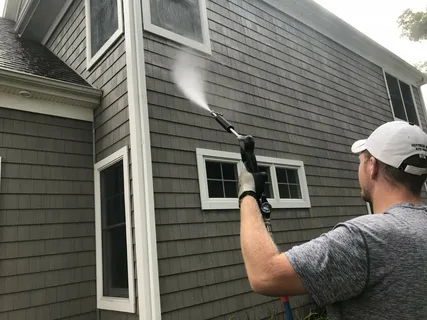
Exterior pressure washing services in San Diego are not one-size-fits-all. A good crew changes pressure, water temperature, nozzle and cleaner for each surface.
Driveways, Walkways and Patios
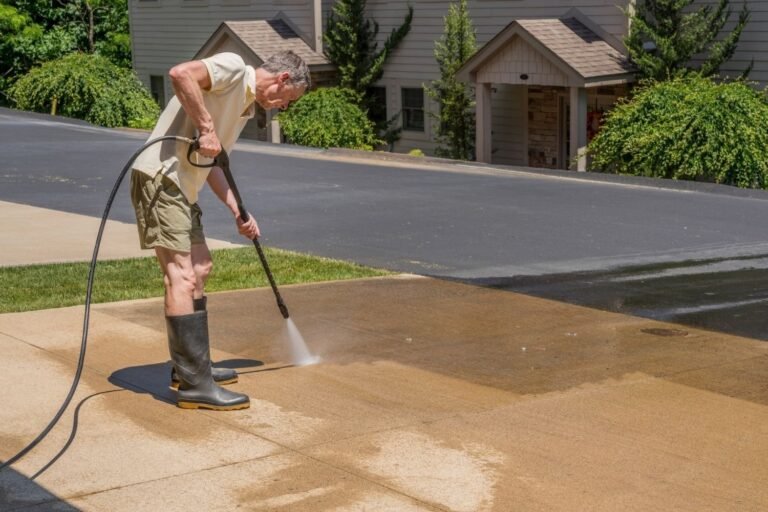
Concrete is porous, so oil, tire marks and organic growth sink in. A rotary surface cleaner gives an even finish without the stripes a hand wand can leave, and hot water lifts oil that cold water only spreads. Stamped and colored concrete gets lower pressure so the color and sealer stay intact.
House Exteriors, Stucco and Siding
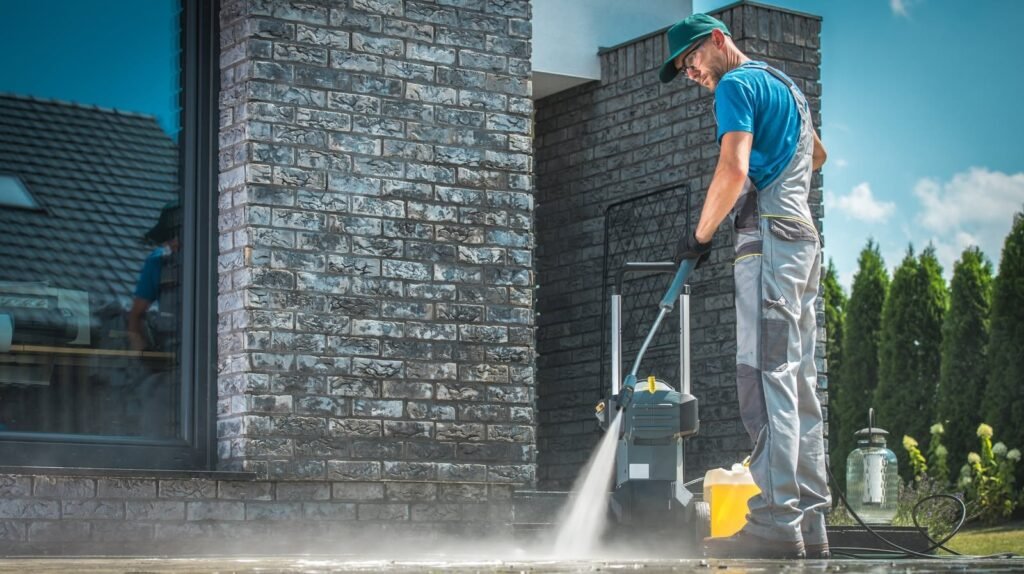
Stucco, painted wood and vinyl siding should not be blasted at high pressure. These surfaces are cleaned with a soft wash: low pressure plus a cleaner that kills mildew and algae at the root, followed by a gentle rinse. It removes the green and black streaks without forcing water behind the siding or chipping paint.
Pool Decks, Pavers and Block Walls
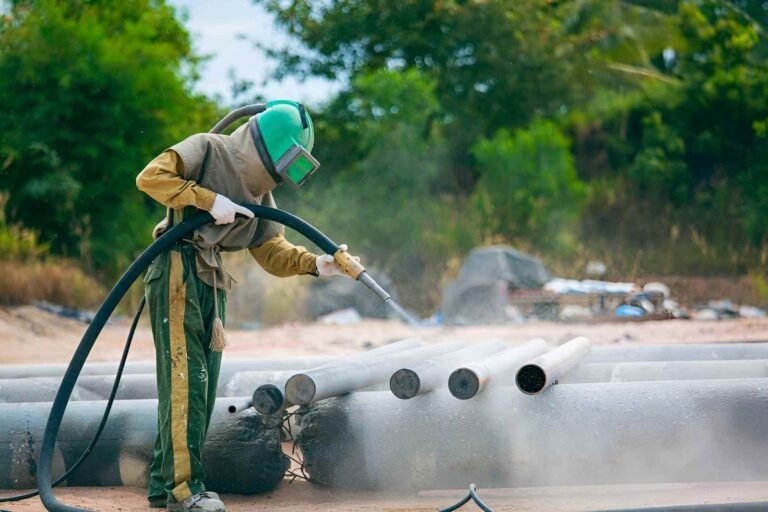
Pool decks collect sunscreen, algae and mineral scale. Pavers need care around the joint sand, which is usually replaced after cleaning so the pavers stay locked. Block walls hit by sprinklers often need a mineral-specific treatment, and for heavy calcium buildup, abrasive blasting may be the better tool.
Storefronts, Sidewalks and Parking Areas
Gum, spilled drinks, grease and foot traffic grime build up quickly at entrances. Commercial crews use hot water and surface cleaners to handle large areas fast, and they work early in the morning or after hours so customers are not disrupted.
How Often Should You Book a Pressure Washing Service in San Diego?
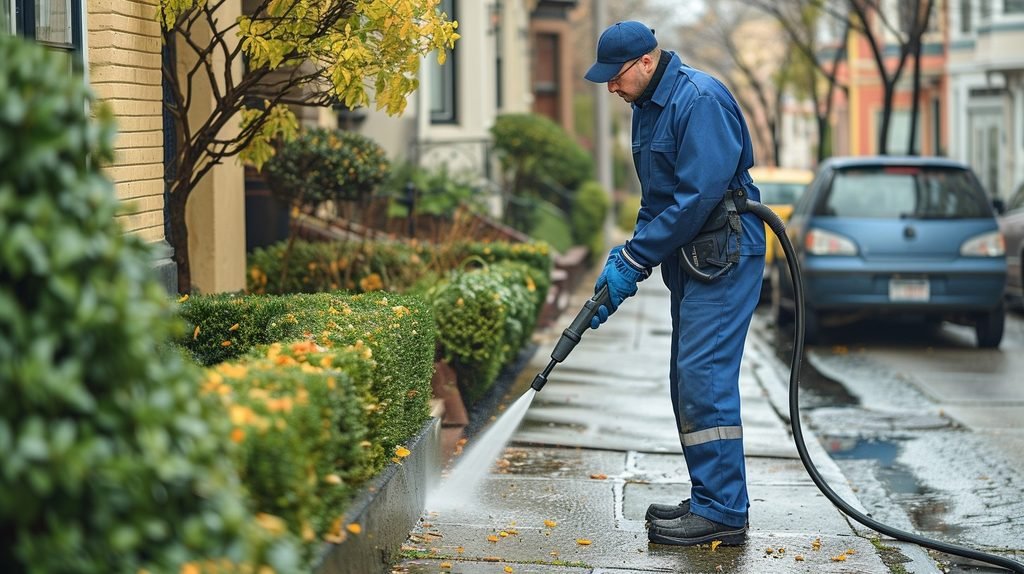
Shade, traffic, trees and distance from the ocean all change the answer. Use these ranges as a starting point:
| Surface | Typical frequency | Why |
| Home driveway and walkways | Every 12 months | Oil drips, tire marks and dust |
| House exterior (soft wash) | Every 12 to 24 months | Mildew, algae and salt film, faster near the coast |
| Patio and pool deck | Every 6 to 12 months | Sunscreen, algae, mineral scale and slip risk |
| Storefront sidewalks and entries | Monthly to quarterly | Gum, spills and heavy foot traffic |
| Restaurant dumpster and grease areas | Monthly | Grease, odor and hygiene concerns |
| Parking lots and garages | Quarterly to twice a year | Oil, fluids and tire residue |
Timing matters too. For a deeper look at seasons and warning signs, see our guide on the Best Time to Pressure Wash Concrete. The same basic rules apply in San Diego: wash before the winter rains so grime does not turn to mud, and again in spring to clear the growth that the wet months and the marine layer leave behind.
Pressure Washing and Commercial Property Maintenance
For property managers, HOAs and business owners, exterior cleaning is a core part of commercial property maintenance. Clean entries and walkways shape a customer’s first impression, reduce slip-and-fall risk and help paint, coatings and concrete last longer.
What a Commercial Maintenance Plan Includes
- A written schedule for each area, from daily-traffic entries to quarterly parking lot cleaning.
- After-hours service for retail centers, restaurants and office buildings.
- Gum and stain treatment at entrances, drive-throughs and dining patios.
- Graffiti removal on masonry, block walls and signage before it attracts more.
- Pairing with sweeping so debris is removed before washing and lots stay clean between visits.
San Diego Runoff Rules Every Owner Should Know
This is where many property owners get caught. In San Diego, it is illegal to let polluted wash water reach the storm drain system, which includes streets, gutters, curbs and alleys, not only the drain grates themselves (San Diego Municipal Code §43.0304). Violations can bring penalties of up to $10,000 per day per incident, and the rule applies whether the work is done by the owner, a tenant or a contractor (City of San Diego).
Storm drains in San Diego flow untreated to creeks, bays and the ocean. The city expects anyone washing outdoor surfaces to follow four steps:
- Control. Sweep first and cover or block nearby storm drains.
- Contain. Keep wash water inside the work area with berms, booms or mats.
- Capture. Recover the water with a vacuum system instead of letting it evaporate or run off.
- Dispose. Send captured water to the sanitary sewer with proper authorization, never the gutter.
A professional crew builds these steps into every job and uses biodegradable, phosphate-free cleaners. If a company cannot explain how it handles runoff, keep looking.
Professional Pressure Washing vs. DIY
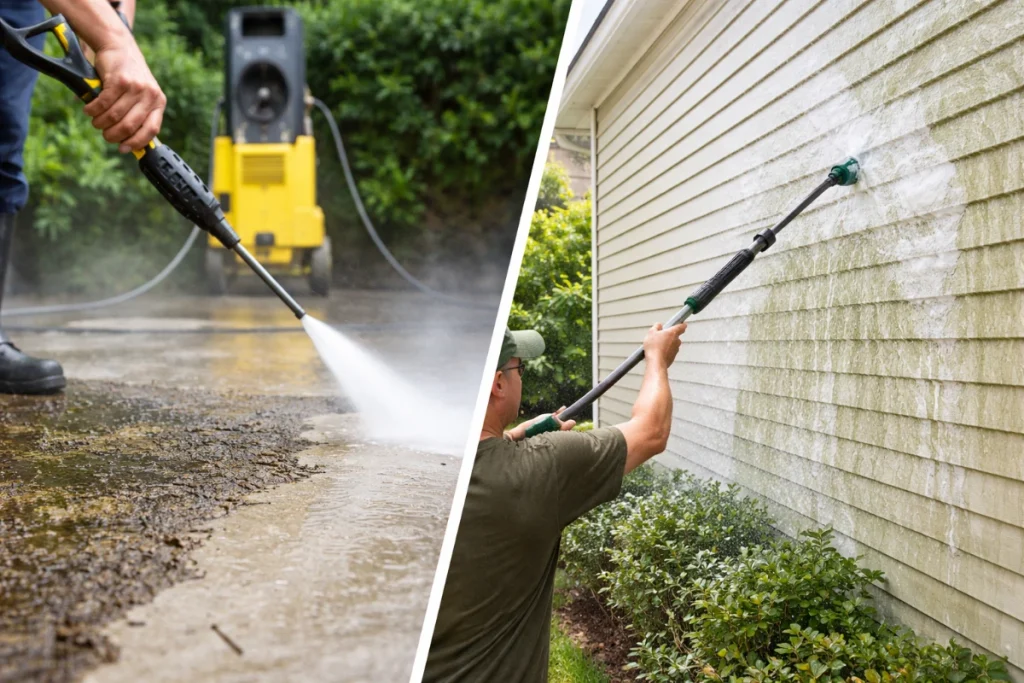
Renting a pressure washer for a small, lightly soiled slab is fine. Bigger or more delicate jobs are where DIY tends to go wrong:
- Etched concrete and zebra stripes from the wrong tip or uneven wand distance.
- Water behind stucco and siding, which can lead to stains, peeling paint and hidden moisture.
- Stripped sealer and color on stamped concrete and pavers.
- No runoff control, which leaves you responsible for wash water in the gutter.
- Injury risk, since a high-pressure stream can cut skin and knock someone off a ladder.
A professional pressure washing service brings hot water units, surface cleaners and soft wash systems, so the job is faster, more even and safer for the surface.
How to Choose Pressure Washing Services Near Me
When you search for pressure washing services near me, the list is long. These questions separate solid crews from the rest:
- Are you licensed and insured? Ask for a certificate of insurance before work starts, especially for commercial and HOA properties.
- Do you change methods by surface? Look for soft washing on stucco and siding, and surface cleaners on concrete.
- Do you use hot water? It is the most effective way to break down oil and grease.
- How do you handle runoff? The answer should include drain covers, containment and water recovery.
- What is included in the quote? Get a written price with no surprise fees.
- Can I see reviews and past work? Recent photos and Google reviews tell you more than a sales pitch.
Frequently Asked Questions
How much does a pressure washing service cost in San Diego?
Pricing depends on square footage, surface type, how dirty the area is, stain treatment, access and whether the job is residential or commercial. JM Pressure gives free quotes, and sending a few photos speeds things up. Repeat commercial contracts and bundled services can lower the cost.
Is pressure washing safe for stucco?
High pressure is not. Stucco should be soft washed with low pressure and a cleaning solution that kills mildew and algae, then rinsed gently.
Do I need a permit to pressure wash in San Diego?
Routine exterior cleaning does not usually need a permit, but you must keep wash water out of the storm drain system. Disposing of captured water into the sanitary sewer may require authorization, so ask your contractor how they handle it.
Can pressure washing remove oil stains?
Fresh and moderate oil stains usually lift with a degreaser and hot water. Old stains that have soaked deep into concrete often lighten a lot but may leave a faint shadow.
How long does exterior pressure washing take?
Most driveways and patios take one to three hours. A full house exterior or a commercial lot can take a day or be split across overnight visits.
Does JM Pressure serve all of San Diego?
JM Pressure takes on pressure cleaning in San Diego on a project basis, including Mission Valley, Kearny Mesa and coastal neighborhoods from Point Loma to La Jolla. Visits are planned in advance, so call early to get on the schedule.
About JM Pressure
JM Pressure, also known as JM Pressure Washers, is a veteran-owned exterior cleaning company with seven years of experience. The owner is on the job, and the team uses commercial hot and cold water units, surface cleaners, blasting rigs and sweepers. Services include residential and commercial pressure washing, street and parking lot sweeping, sandblasting, graffiti removal and calcium removal.
The company carries $2 million in general liability and $1 million in auto coverage, provides certificates of insurance for commercial and HOA clients, covers drains on every job and uses biodegradable cleaners. Its home base is the Inland Empire, where it offers Pressure Washing Services in Riverside, CA and it serves San Diego on a scheduled, project basis.
Book Your San Diego Pressure Washing Service Today
Salt film, mildew and oil stains do not go away on their own, and in a city with so little rain, they only get harder to remove. A professional cleaning brings back the color of your concrete and walls, makes walkways safer and protects your investment.
Whether you need a driveway refreshed, a home soft washed or a full commercial maintenance plan, learn more about our Pressure Washing Service In San Diego, CA and get a plan built around your property.
Call 909-701-9977 or request your free quote from JM Pressure today. Send a few photos for a faster estimate.