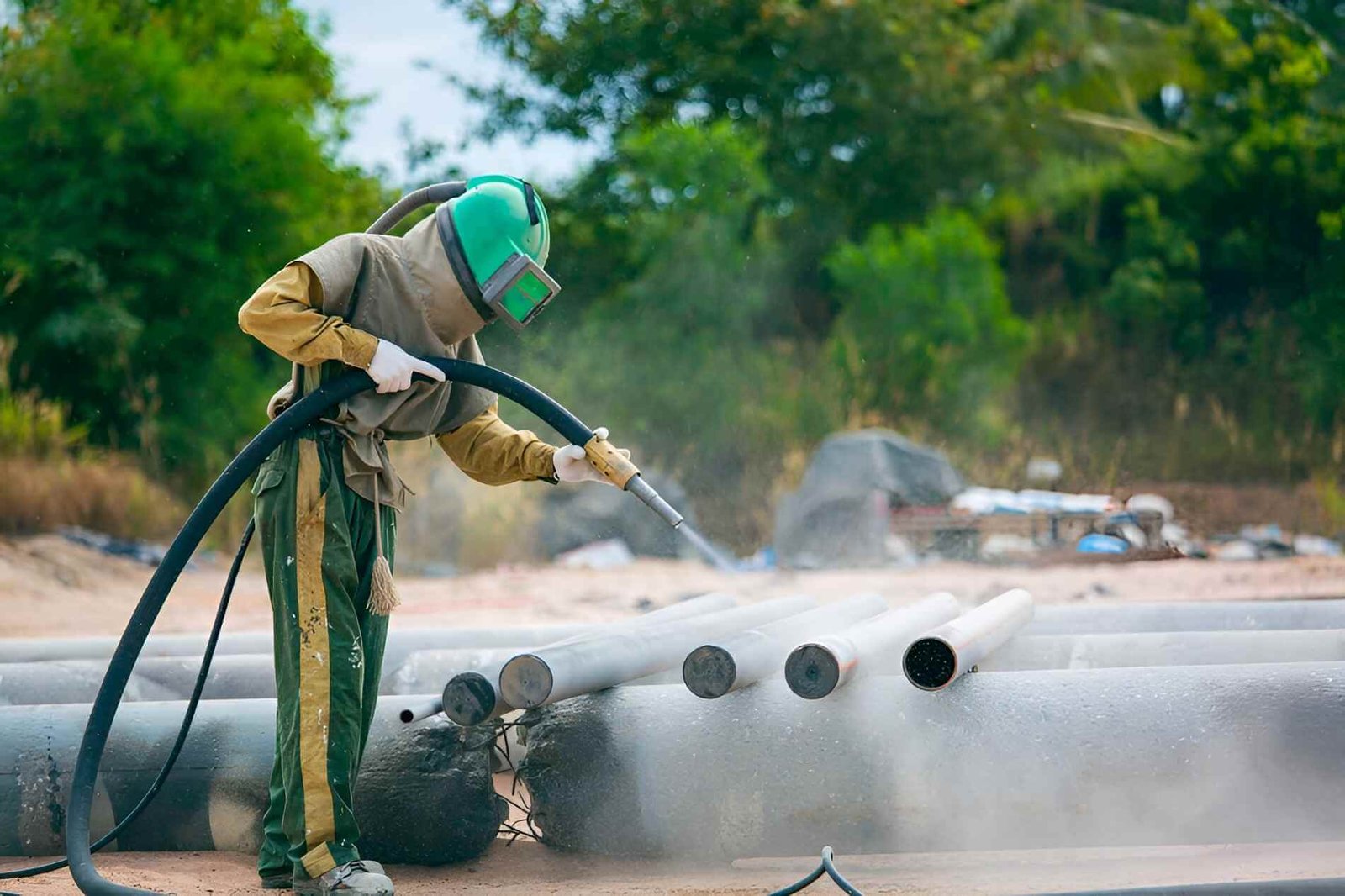
A new coat of paint looks great for a season. Then the rust bleeds through, the edges lift, and the coating starts to peel in sheets. In most cases the paint was never the problem. The surface underneath was.
Commercial sand blasting fixes that problem at the source. It strips rust, old coatings and grime off steel, concrete and masonry, and leaves a clean, textured surface that new paint, epoxy or sealer can actually grip. For property managers, contractors and business owners, it is the difference between a coating that lasts a year and one that lasts a decade.
This guide explains how commercial sand blasting works, the seven ways it improves surface preparation, and how to pick the right crew for your project.
The quick answer:
- Commercial sand blasting fires abrasive media at high speed to clean a surface and give it texture before coating.
- It removes rust, mill scale, failed paint and bonded contaminants that wire brushes and pressure washers leave behind.
- Modern crews rarely use silica sand. Safer media such as garnet, crushed glass or aluminum oxide do the work today.
What Is Commercial Sand Blasting?
Commercial sand blasting, also called commercial abrasive blasting, is the process of propelling an abrasive at a surface with compressed air or water. The impact scours away anything loose or weak and roughens the substrate into a fine profile of peaks and valleys.
The name stuck from the days when crews used beach or silica sand. Today, most professionals use other media, partly for better results and partly because silica sand creates dangerous dust (more on that below).
Commercial vs. Industrial Sand Blasting
The two terms overlap, but the jobs are usually different in scale and setting:
| Factor | Commercial sand blasting | Industrial sand blasting |
| Typical sites | Storefronts, warehouses, restaurants, HOAs, parking structures, schools | Refineries, shipyards, bridges, factories, tank farms |
| Common surfaces | Steel railings, gates, stairs, loading docks, concrete walls, pool decks | Structural steel, pipelines, tanks, ship hulls, heavy machinery |
| Equipment | Portable blast pots and trailer-mounted compressors | Fixed blast rooms, large mobile rigs, recovery systems |
| Main goal | Clean, coat-ready surfaces with minimal disruption to the business | Spec-driven prep for heavy-duty protective coatings |
Industrial sand blasting often follows strict engineering specs on large structures. Commercial sand blasting brings the same principles to everyday business properties, where access, cleanup and downtime matter just as much as the finish.
How Commercial Sand Blasting Works
Every professional job follows the same basic sequence. Skipping any step is where most surface prep failures start.
- Inspect the surface. The technician checks the substrate, the coating being removed, the level of rust and the finish your new coating requires.
- Test older coatings. Paint applied before 1978 may contain lead, which changes the containment, safety and disposal plan.
- Protect the site. Windows, landscaping, vehicles and nearby surfaces are covered, and the work zone is tarped or contained.
- Select media and pressure. Abrasive type, grit size, nozzle and air pressure are matched to the surface and the target profile.
- Blast. The operator works in steady, overlapping passes at a consistent angle and distance until the surface reaches the required level of clean.
- Inspect and measure. The surface is checked against the cleanliness standard and the anchor profile is measured.
- Clean up and coat. Dust and spent media are removed, and the coating goes on before flash rust or new contamination can form.
Choosing the Right Abrasive Media
| Media | Best for | What to know |
| Garnet | Steel, rust and coating removal | Fast cutting, low dust and a clean, even profile. A common choice for commercial work. |
| Crushed glass | Steel, concrete and masonry | Free of crystalline silica and widely available. Leaves a sharp profile. |
| Aluminum oxide | Hard coatings, heavy rust, metal fabrication | Very hard and recyclable in blast rooms. Aggressive on soft surfaces. |
| Glass beads or soda | Light cleaning, delicate surfaces, mineral scale | Gentle. Cleans without much profile, so it suits restoration more than coating prep. |
| Silica sand | Rarely used today | Creates respirable crystalline silica dust, a serious lung hazard regulated by OSHA. |
7 Ways Commercial Sand Blasting Improves Surface Preparation
Coating manufacturers agree on one point: a coating is only as good as the surface under it. Here is how commercial sand blasting gives every coating a better start.
1. Commercial Sand Blasting for Rust Removal Gets Metal Truly Clean
Rust is porous and keeps growing under paint. A wire brush polishes the top of it, but corrosion stays locked in pits and seams, ready to push the new coating off from below.
Commercial sand blasting for rust removal cuts rust, mill scale and corrosion out of those pits and takes steel back to bright metal. That makes it the go-to prep for steel railings, stair stringers, gates, dumpster enclosures, loading dock plates and structural beams.
2. It Strips Old Paint and Failed Coatings Completely
Painting over a failing coating is like building on a cracked foundation. When the old layer lets go, it takes your new paint with it.
Commercial abrasive blasting removes peeling paint, chalky coatings, old epoxy and graffiti layers down to sound material in a single pass. You start the new system on a clean, uniform base instead of a patchwork of old layers.
3. It Creates an Anchor Profile That Coatings Can Grip
This is the benefit most people never see. Blasting leaves a fine pattern of peaks and valleys called the anchor profile. Paint, epoxy and sealers flow into that texture and lock on mechanically.
Coating makers list the profile depth they want on their product data sheets, often measured in mils (thousandths of an inch). A professional crew picks the media and pressure to hit that number and checks it with profile gauges or replica tape, so the coating bonds the way it was designed to.
4. It Reaches Corners, Welds and Textures That Hand Tools Miss
Grinders and sanders work on flat, open areas. Commercial sand blasting reaches everywhere the media stream can travel: weld seams, bolt heads, inside corners, decorative ironwork, split-face block and textured concrete.
That full coverage matters, because coatings usually fail first at edges, welds and corners where prep was weakest.
5. It Meets Measurable Cleanliness Standards
Good surface prep should not be a matter of opinion. The coating industry uses written standards from AMPP (formerly SSPC and NACE) to define how clean a blasted surface must be. Common levels for steel include:
| Standard | Level of clean | Typical use |
| SSPC-SP 7 / NACE 4 | Brush-off blast. Removes loose rust, paint and mill scale. | Light-duty recoats and touch-ups |
| SSPC-SP 6 / NACE 3 | Commercial blast. Most rust, paint and scale removed, with light staining allowed. | Many commercial steel projects |
| SSPC-SP 10 / NACE 2 | Near-white blast. Only slight staining left on a small part of the surface. | High-performance coatings and harsher exposures |
| SSPC-SP 5 / NACE 1 | White metal blast. Completely clean, bare steel. | The most demanding coating systems |
When your coating spec names one of these levels, commercial sand blasting is usually the only practical way to reach it, and a qualified crew can show you the result before any coating goes on.
6. It Removes Bonded Contaminants That Pressure Washing Leaves Behind
Pressure washing is excellent for dirt, mildew, grease and loose debris, and it is often the first step before a blast. What it cannot do is remove material that is bonded to the surface, such as tight rust, hardened coatings, efflorescence and mineral scale.
Abrasive blasting handles those bonded layers. Gentle media can even lift hard water scale from tile and stone, which is the idea behind Calcium Removal Sand Blasting for pools, fountains and block walls. On a commercial job, the two services often work together: a wash to clear the grime, then a blast to prepare the surface.
7. It Saves Time and Extends Coating Life
Blasting a railing system or a concrete wall is far faster than grinding or hand scraping it, which shortens the time your property is roped off. The bigger payoff comes later.
A well-prepared surface holds its coating for years longer, so you repaint less often and avoid the cost of stripping a failed system a second time. For many owners, that lower cost over the life of the coating is the strongest case for commercial sand blasting.
Where Commercial Sand Blasting Makes the Biggest Difference
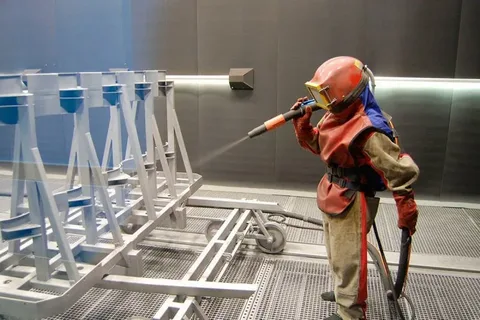
Commercial sand blasting is used on almost every type of business property. Common projects include:
- Steel railings, stairs, gates and fencing before repainting
- Warehouse loading docks, dock plates and bollards
- Concrete walls and floors before epoxy, sealer or paint
- Parking structure columns, curbs and striping removal
- Brick and block facades with paint, graffiti or efflorescence
- Restaurant and retail patios, planters and outdoor furniture frames
- Equipment, trailers and metal signage before powder coating or paint
Inland Southern California adds its own challenges. Sun, heat and sprinkler overspray break down coatings and leave mineral deposits on walls and metal. JM Pressure offers Sand Blasting in Moreno Valley, CA for warehouses, retail centers and other commercial properties across the Inland Empire.
Commercial Sand Blasting vs. Other Surface Prep Methods
| Method | Removes rust and old coatings? | Creates anchor profile? | Best use |
| Hand and power tools | Partly. Struggles in pits and corners. | Little to none | Small spot repairs |
| Pressure washing | No. Removes loose material only. | No | Dirt, mildew, grease and pre-cleaning |
| Chemical stripping | Coatings yes, rust no | No | Delicate or detailed surfaces |
| Dry ice blasting | Some coatings and residue | No | Cleaning without media cleanup or surface wear |
| Commercial sand blasting | Yes | Yes, matched to the coating | Full prep before paint, epoxy or sealer |
The right method depends on the surface and the coating you plan to apply. A good contractor will tell you when a lighter method is enough instead of upselling a blast you do not need.
Safety and Compliance: Why Commercial Abrasive Blasting Is a Pro Job
Commercial abrasive blasting is powerful work, and it carries real risks when it is done without training and the right equipment:
- Silica dust. OSHA warns that breathing respirable crystalline silica can cause silicosis, lung cancer and kidney disease, and it sets strict exposure limits for blasting work (OSHA).
- Lead and other hazards. Older coatings may contain lead or other heavy metals, which bring their own testing, containment and disposal rules from OSHA and the EPA.
- Surface damage. The wrong media or pressure can pit steel, etch concrete or blow out mortar joints.
- Site impact. Without containment, media and dust reach cars, windows, drains and neighboring businesses.
Professional crews manage these risks with silica-free media, respiratory protection, containment, and proper cleanup and disposal.
How to Choose a Commercial Sand Blasting Contractor
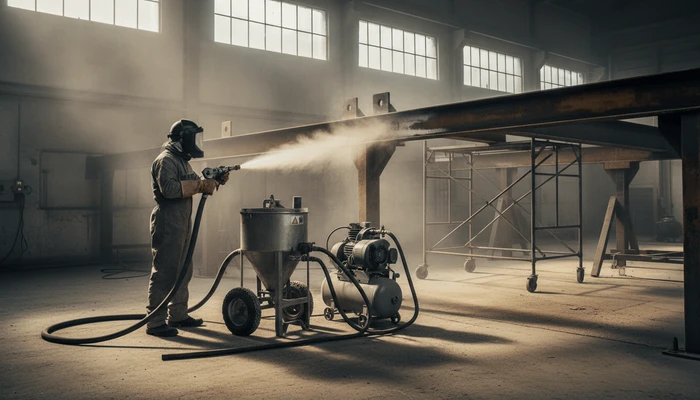
Before you sign a quote, look for a company that:
- Asks what coating will go on next and which cleanliness standard it needs
- Explains its media choice and why it fits your surface
- Tests older coatings for lead before blasting
- Has a plan for containment, cleanup and disposal of spent media
- Carries liability insurance and provides a written quote with a clear scope
- Shows before-and-after photos from commercial jobs in your area
Local experience matters too. Crews who work your region know how the climate treats metal, concrete and coatings, and they can schedule around your business hours.
Frequently Asked Questions
What is the difference between commercial and industrial sand blasting?
Commercial sand blasting usually covers business properties such as storefronts, warehouses and HOAs. Industrial sand blasting typically covers heavy infrastructure such as tanks, pipelines and factories, often under detailed engineering specs. The process and principles are the same.
Is sand still used in commercial sand blasting?
Rarely. Most crews use garnet, crushed glass, aluminum oxide or other media because silica sand creates hazardous dust. The term “sand blasting” simply stuck.
Will sand blasting damage concrete or brick?
Not when the media and pressure suit the surface. A pro starts with a test area and adjusts until the surface is clean and properly profiled without pitting or blown-out joints.
How soon should a surface be coated after blasting?
As soon as practical. Bare steel can flash rust within hours in humid conditions, so most coating specs call for priming the same day. Your coating manufacturer’s data sheet gives the exact window.
How much does commercial sand blasting cost?
Price depends on the square footage, the surface, the coating being removed, the cleanliness level required, access and containment needs. Photos and measurements help a contractor give you an accurate written quote.
Can sand blasting remove graffiti?
Yes. Blasting removes graffiti from concrete, block and brick, though softer media or other methods may be better on delicate masonry. Many owners pair graffiti removal with a sealer that makes future cleanup easier.
About JM Pressure
JM Pressure, also known as JM Pressure Washers, is a pressure washing and surface restoration company based in Riverside, California. The team serves Riverside and nearby Southern California cities, including Moreno Valley, Los Angeles, Anaheim and City of Industry.
Services include house and roof washing, concrete and paver sealing, rust and graffiti removal, dry ice blasting and sandblasting for homes and businesses.
About the Author
This article was written by the JM Pressure team, the crew behind the company’s sandblasting and pressure washing work, with seven years of experience in the field. It draws on guidance from OSHA, the EPA and AMPP surface preparation standards, listed under Sources below.
Get Your Surfaces Coat-Ready With JM Pressure
A new coating can only perform as well as the surface beneath it. Commercial sand blasting removes rust, failed paint and bonded grime, and gives your next coat the clean, textured base it needs to last.
JM Pressure provides commercial sand blasting along with Pressure Washing Services in Riverside, CA and across the Inland Empire.
Call 909-701-9977 or request a free quote from JM Pressure today. Send a few photos of your project for a fast estimate.