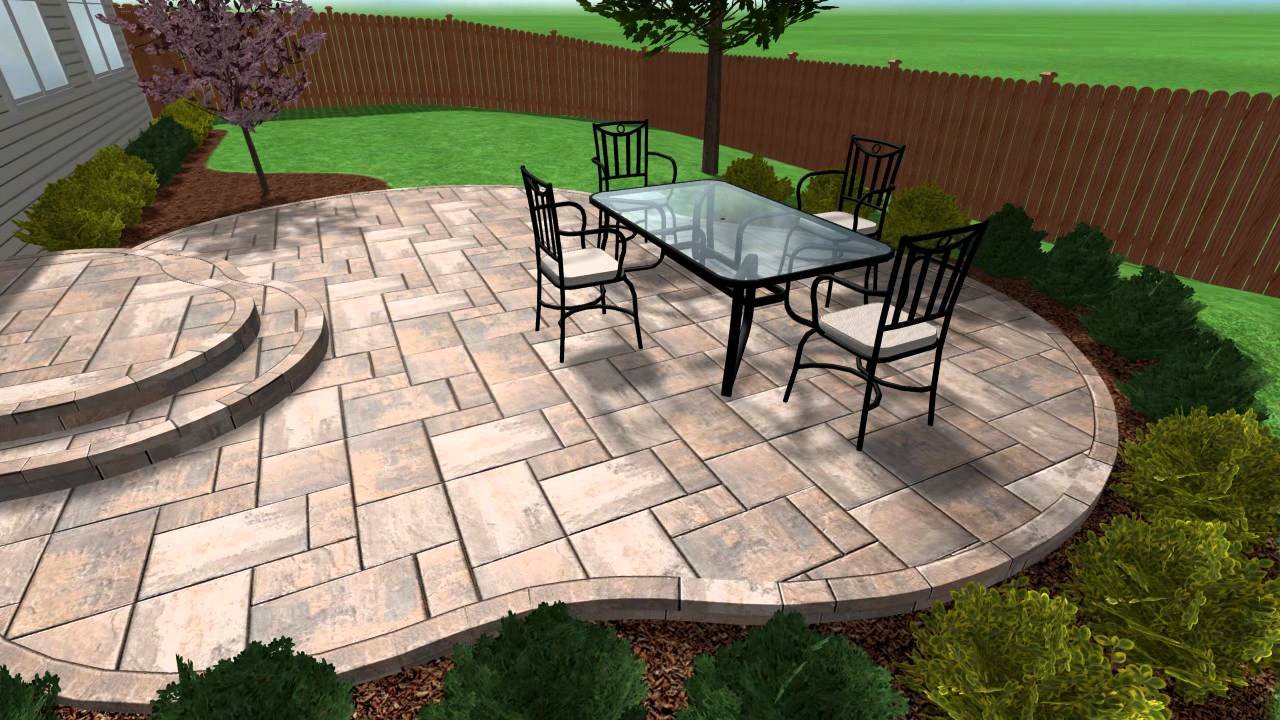
Many patios fall short because they look good but don’t match how the family uses the space. A good patio is about more than an attractive finish. Its size, drainage, shade, access, and layout all affect how the family will use it. Concrete patios with a solid base are ideal for any layout, as they can support heavy furniture and big gatherings. Here are 27 ideas for concrete patios followed by sections on planning and sealing.
Concrete Patio Ideas for Dining
1. Size the slab for the table. A six-seat table needs about 10 by 12 feet so chairs can slide back without leaving the concrete.
2. Put it near the kitchen door. The short trips with hot meals will increase your outside eating.
3. Choose a broom finish. Light texture gives shoes grip when the surface is wet.
4. Give the grill its own zone. Keep heat and grease away from the table, with open space on all sides.
5. Add shade. A pergola or shade sail helps to keep the visitors and the slab cooler during the afternoon hours.
6. Pick a lighter tone. Pale colors stay cooler underfoot than dark stains in July.
7. Build a low seat wall. It adds seating and marks the patio edge without a fence.
Concrete Patio Ideas for Relaxing
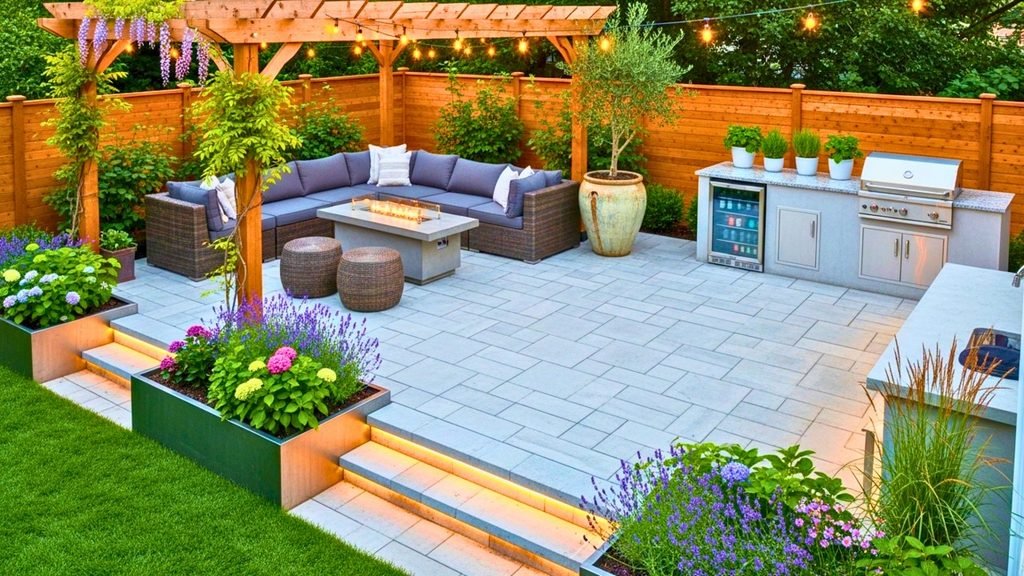
8. Step down into a lounge. A low sunken spot is recessed, but remember not to have water in a low spot.
9. Add a fire pit. Set it well away from the house and any overhang, and check local burn rules first.
10. Cover part of the slab. A roofed section stays usable in rain and summer storms.
11. Curve the edges. Soft lines make a small yard feel less boxy.
12. Cut in planter beds. Leave openings for shrubs or containers to break up the gray.
13. Create a quiet corner. A small second pad with two chairs gives you a reading spot away from the main action.
14. Try a wall fountain. Running water adds background sound and takes little floor space. Plan the electrical supply and maintenance access before the pour.
Concrete Patios for Entertaining
15. Plan an outdoor kitchen pad. Decide where gas, water, and power will run before pouring. This saves you from cutting the slab later.
16. Build a bar ledge. A counter along the patio edge keeps drinks and conversation together.
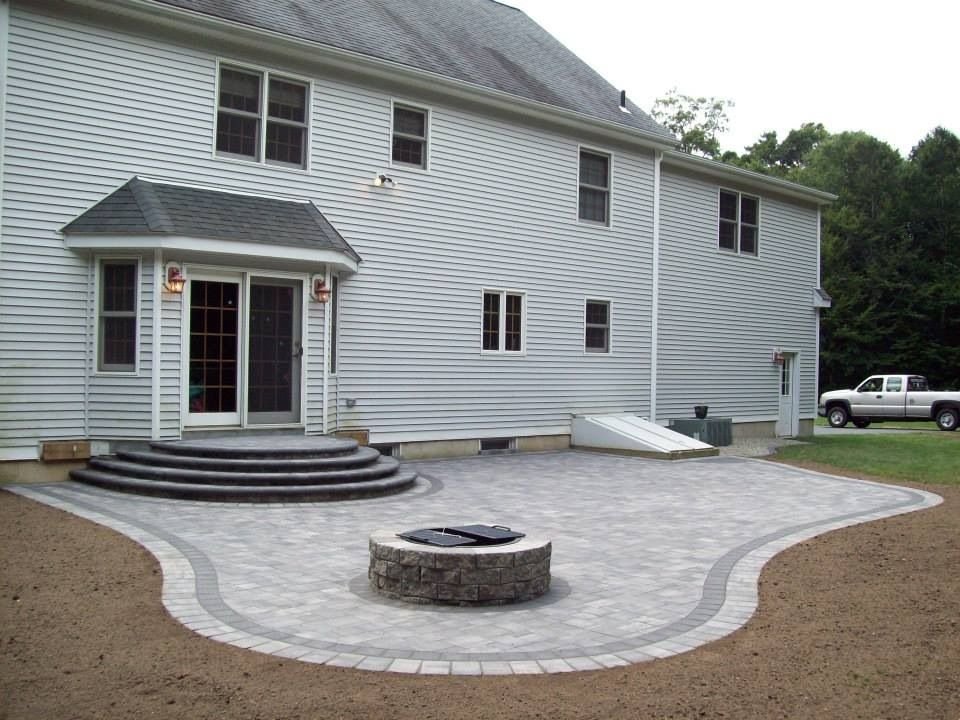
17. Widen the steps. Deep, broad steps double as extra seating when the crowd grows.
18. Set light poles early. Footings for string lights are easiest to place before the pour. Mark pole locations with your contractor so the spacing suits the string length and doesn’t cut into the seating area.
19. Leave a games lane. A clear, level stretch works for cornhole or kids’ chalk drawing. Keep it off the main walkway so play doesn’t run through the dining area.
20. Extend it poolside. Use a textured finish so wet feet stay steady.
21. Add a side path. A walkway from the gate or driveway keeps guests out of the house. A wide path also makes it easier to move chairs, coolers, and grills.
Concrete Patio Finishes
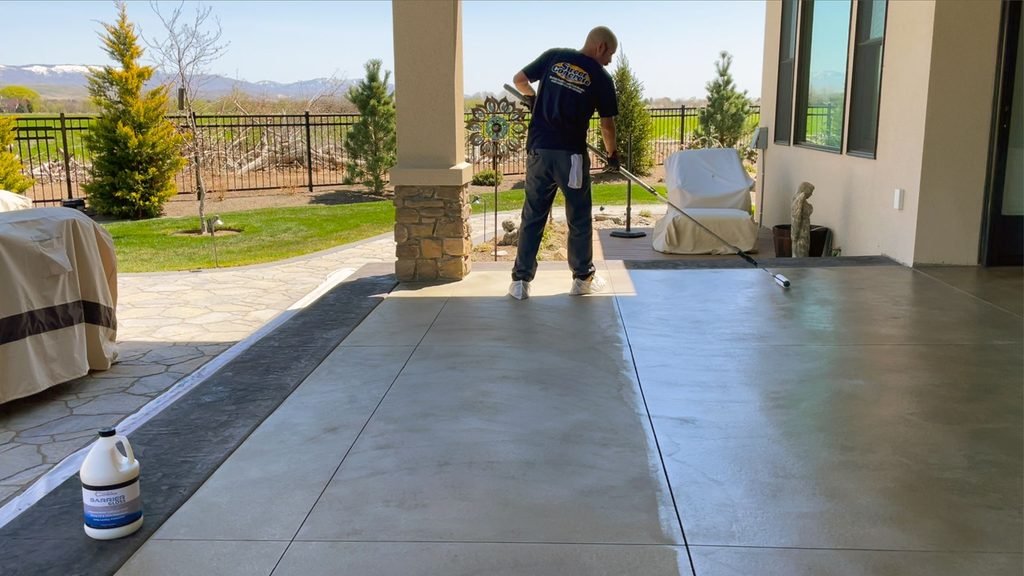
22. Stamp a pattern. Stamped concrete can be reproduced to look like stone, brick, or wood planks. Learn how it can make a patio look brand new in our guide to Concrete Repair & Patio projects.
23. Stain it. Red clay landscaping pairs well with earthy colors such as tan and brown. Testing the stain on a small area is a good idea as color may differ depending on the age of the concrete, how porous it is, and what the existing surface finish was.
24. Use exposed aggregate. Exposed aggregate provides texture and a distinctive appearance, but its surface can feel rougher under bare feet than smoother concrete finishes.
25. Saw-cut a grid. Planned joints create intentional lines that control shrinkage cracks.
26. Frame it with a border. You can add a contrasting band to help give even the simplest slab a finished edge. Select a color that blends in with the house trim or brick, and maintain the width at the same proportion as the patio, to avoid clutter.
27. Resurface, don’t replace. If the slab is structurally sound, an overlay can refresh it. A contractor can tell you which case you have.
How to Plan a Concrete Patio
When it comes to concrete patios, there are a few basic concepts that need to be emphasized in the design phase. Many homes have four-inch slabs for their residential patios. The thickness required is dependent on site conditions and future use.
To seamlessly drain water, the patio surface should slope away from the house. The exact slope should be determined by the contractor. Control joints direct the cracking of the concrete.
Clay soil with poor drainage is common in much of the Dallas area. This is why grading and base preparation are essential for a patio in Dallas and surrounding areas. Ask the Professional Concrete Contractors you hire how they’ll handle thickness, drainage, and base preparation.
Which Concrete Patio Sealer Should You Use?
There is no single concrete patio sealer that’s right for every surface. This depends on the finish you want, the look you are trying to achieve, and the amount of water, sun, and foot traffic on the patio. Penetrating sealers are appropriate for plain broom-finished surfaces as they will not affect their appearance. Such as silane and siloxane.
Acrylic sealers form a film to intensify and improve tone and to give a satin or glossy effect. Homeowners use stamped or stained patios to further deepen the color and visible sheen. Use an anti-slip additive; film sealers are slippery when wet. Wait until new concrete sets before you seal it, and anticipate sealing at regular intervals, based on sun exposure and foot traffic.
Planning Your Concrete Patio
When planning a concrete patio, there are many factors to consider.
The first step to having a usable concrete patio is to determine how you will utilize it. Plan furnishings and plan for drainage prior to the pour. Select a weather- and traffic-appropriate finish. The layout and base preparation are very difficult to change once concrete is poured.
To talk through size, finish, and budget, contact a Concrete Contractor in Dallas GA at Big D’s Concrete LLC.